


Role playing
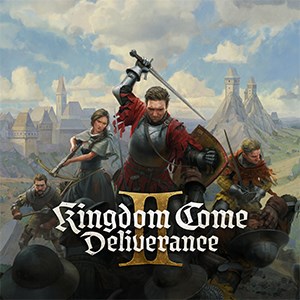
Kingdom Come: Deliverance II promises to be an immersive historical role-playing experience that seeks to blend authenticity with engaging gameplay. Developed by Deep Silver, this sequel aims to elevate the open-world RPG genre through meticulous attention to historical detail and innovative mechanics. Whether you're a veteran in medieval narratives or a newcomer eager for a richly woven story, this title aspires to offer something unique—assuming the core features can truly deliver.
Kingdom Come: Deliverance II is positioned as a realistic medieval role-playing game that emphasizes historical accuracy, narrative depth, and player agency. Crafted by Deep Silver—a publisher renowned for quality storytelling across genres—the game focuses on creating a believable world set in turbulent 15th-century Bohemia. The key highlights include a highly detailed open world, a comprehensive character progression system rooted in skills and choices, and a branching narrative shaped by player decisions. It targets history enthusiasts, RPG fans seeking immersion, and gamers who favor nuanced storytelling over casual gameplay.
The first thing that strikes you when launching Kingdom Come: Deliverance II is its commitment to storytelling grounded in historical realism. Unlike typical fantasy RPGs, the game offers a narrative deeply rooted in real medieval events, with a protagonist whose journey is shaped more by choices and consequences than mere combat mechanics. The storyline feels like a living tapestry—intertwining personal quests with larger socio-political struggles, all set against the backdrop of a convincingly recreated Medieval Europe.
The game's environment is a meticulously crafted piece of digital art. Towns, forests, and castles breathe authenticity; every cobblestone and tree appears intentionally placed to mirror the real-world locations they emulate. The interface is intuitive yet unobtrusive, allowing players to navigate menus and maps effortlessly. The visual design enhances immersion without overwhelming, and the weather and day-night cycle contribute to a dynamic world where players truly feel part of history.
Strategy and survival form the core of gameplay. The controls are responsive, and actions like combat, dialogue, and crafting flow smoothly, although mastering them requires an investment of time—suitable for players willing to learn complex systems. The game rewards patience; the detailed skill trees and realistic combat require understanding and finesse. It's akin to learning a new craft—it challenges but also profoundly rewards players who invest effort.
One of the most distinctive aspects of Kingdom Come: Deliverance II lies in its character progression and narrative mechanics. Unlike many RPGs that rely heavily on class-based systems or superficial choices, this game offers a nuanced skill development system based on real-world activities—swordsmanship, herbalism, diplomacy—that influence how events unfold. The depth of consequence in dialogue options and story branches makes every decision meaningful, akin to navigating a complex web of historical dilemmas where your choices can alter the course of the game's world.
Particularly standout is the character development system, which emphasizes practice, reputation, and authentic skill growth. As you train in specific areas, abilities improve naturally, making progress feel organic rather than artificial. This stands out from other role-playing titles that simply assign points; here, mastery is earned through structured engagement with the game's environments and activities, adding a layer of realism and satisfaction.
The game's narrative architecture is profoundly consequence-driven. Your interactions and choices can lead to multiple endings, alliances, or conflicts—offering a replayability factor beyond typical linear stories. This system feels like walking through a medieval village where every decision can influence your reputation, the loyalty of your companions, or the outcome of key events. Such depth elevates the storytelling experience from mere entertainment to an exploration of moral complexity.
Overall, Kingdom Come: Deliverance II appears poised to set a new standard for realistic medieval RPGs, especially with its focus on authentic character progression and consequence-rich storytelling. It's best suited for players who enjoy deep, methodical gameplay with a strong narrative backbone—those willing to invest the time to understand and master its systems. If you appreciate historical Fidelity and nuanced role-playing over flashy graphics or superficial choices, this game will likely meet your expectations.
However, prospective players should be aware that its learning curve can be steep, and the emphasis on realism means less hand-holding. For fans of immersive, weighty storytelling and detailed world-building, Kingdom Come: Deliverance II is strongly recommended. For casual gamers or those preferring fast-paced action, it may feel demanding but ultimately rewarding—like piecing together a complex puzzle of medieval life.
Immersive Open World
Rich Narrative and Quests
Authentic Historical Setting
Deep Character Development
Complex Combat System
Occasional Performance Issues
Steep Learning Curve
Limited Tutorial Guidance
High Hardware Requirements
Occasional Bugs and Glitches

for Windows
 4.9
4.9

for Windows
4.9

for Windows
4.8

for Windows
4.8

for Windows
4.8
for Windows
4.7

for Windows
4.6

for Windows
4.6

for Windows
4.6

for Windows
4.6

for Windows
4.5
for Windows
4.4

for Windows
5

for Windows
5

for Windows
5

for Windows
5

for Windows
5

for Windows
5

for Windows
5

for Windows
5

for Windows
5

for Windows
5

